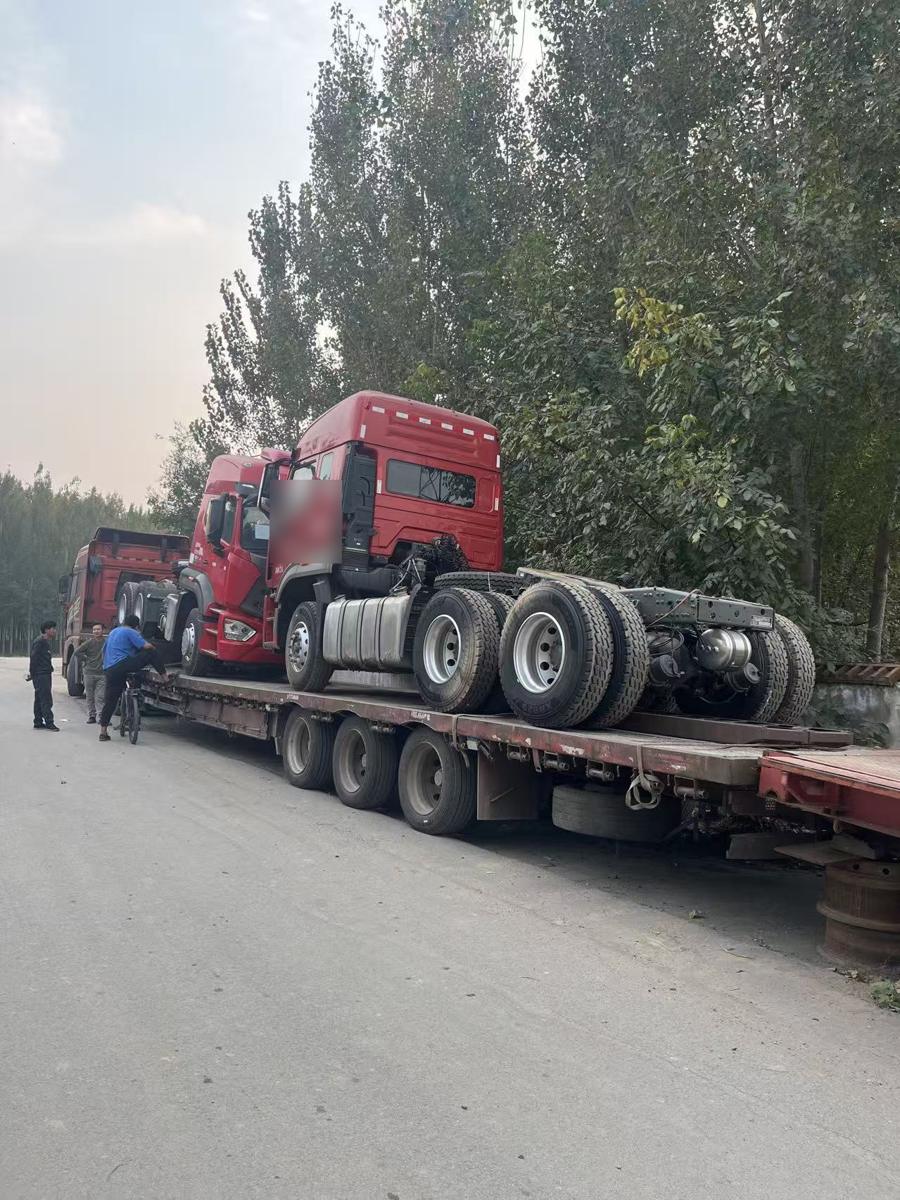
RoRo or flat rack: how to choose
RoRo (roll-on/roll-off) means the truck drives onto the vessel under its own power and drives off at your port. It fits trucks that run and stay within standard vehicle dimensions. A flat rack is an open steel frame that carries the truck as cargo. It is the option for over-width or over-height bodies and for trucks that cannot drive at all.
The choice is physical, not a preference. If the truck drives and fits, it goes RoRo. If it is too tall, too wide, or does not run, it goes on a flat rack. Body type matters here: a mixer or a tanker with a tall tank can exceed limits even when the chassis is standard, so ask us for the unit's exact dimensions before you assume one method. We confirm the shipping method in writing with the quote, so the number you approve is the method that ships.
What a CIF quote should include
CIF stands for cost, insurance and freight. In practice it means our price takes the truck to your destination port. The truck itself, export handling on our side, loading at the Chinese port and the sea freight are inside the number, along with written confirmation of the sailing schedule, transit time and sea freight.
What is not inside is everything that happens after arrival. Customs clearance, import duties and taxes, port charges and inland transport sit with your clearing agent in your country. CIF ends at your port; the quay is where your side starts. Anything quoted as CIF without naming the port, the shipping method and the exclusions is not a number you can compare. Treat it as unfinished.
Before shipment: inspection, payment and documents
Before the truck moves, the sequence is fixed. You get photos, video and a condition report on the unit, and a third-party inspection at the yard can be arranged if you want one. Then a 30% deposit locks the truck, and the 70% balance is paid before the truck leaves the yard for the Chinese loading port. CRTA's buyer service fee is 3% of the transaction value. Our loading photos and videos from recent shipments show how the trucks are secured before they sail.
On documents, split the work. We handle the export side in China. Your clearing agent handles the import side, and the document list differs by country, so check what your port needs before the vessel sails, not after it arrives. Transit paperwork for landlocked destinations is part of that same conversation.
Destination ports and inland countries
Most of our West African deliveries land at Tema, Lagos, Abidjan, Dakar, Conakry, Douala, Monrovia or Freetown. For those buyers the CIF price ends at the port your clearing agent works at.
Mali and Burkina Faso are landlocked, so the journey has a second leg. The truck lands at a coastal port such as Dakar, Abidjan, Lomé or Tema and moves inland under customs transit. Your clearing agent handles the transit procedure and its costs, which sit outside the CIF quote. Name the inland destination when you ask for a quote, so the port we quote is the port your transit route actually uses.
How to compare two quotes
Two CIF quotes are only comparable when the port, the method and the inclusions match. Before you pick the lower number, check both for: the same Incoterm and the same named destination port; the shipping method stated (RoRo or flat rack); inclusions and exclusions written out, not implied; sailing schedule, transit time and sea freight confirmed in writing; and inspection and payment terms spelled out, including what you see before the deposit and when the balance falls due. A quote that is silent on method or exclusions is not cheaper. It is unfinished.
When you are ready, browse the trucks in stock page or watch how we load on the recent shipments page. Send your destination port and the truck you have in mind on WhatsApp (+86 180 0351 2924) and we will come back with a written CIF quote.
FAQ: Is RoRo or flat rack cheaper for shipping to West Africa?
Rates move with the route, the sailing and the truck's dimensions, so there is no fixed answer. Where both methods work, we quote both in writing and you compare them against your budget.
FAQ: Which Chinese port do you ship from?
Lianyungang is one of our regular loading ports, and the loading photos on our site come from there. We can also ship from other Chinese ports.
FAQ: Can I see how the trucks are loaded?
Yes. Loading videos from recent shipments are on our site, so you can see how trucks are secured before they sail.